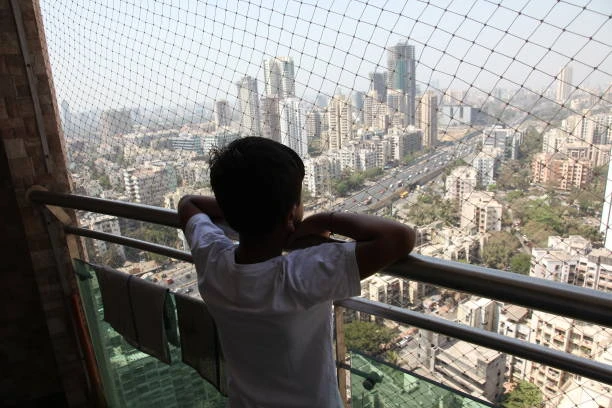
Before you install any balcony protection in your Mumbai home, understand the real differences between grills, nets, and modern invisible systems.
Mumbai’s residential expansion has been largely vertical. With limited land availability and growing urban density, high-rise living has become the dominant housing model across the city. From compact suburban towers to premium skyline developments, balconies are now standard architectural features in most residential projects.
As buildings rise higher, exposure naturally increases.
Balconies in modern apartments are no longer rarely accessed areas. They function as usable extensions of living rooms. Families use them for gardening, relaxation, drying spaces, and even informal work zones. This increased daily usage brings greater responsibility for structural safety.
Several factors contribute to the growing concern around balcony protection in Mumbai:
- High-rise buildings with significant height exposure
- Glass or minimal railing designs prioritising aesthetics
- Strong coastal winds during the monsoon season
- Compact layouts where balconies are easily accessible
Homes with children, elderly residents, or pets
In such environments, safety cannot depend solely on standard railing height. Preventive protection systems are increasingly viewed as necessary rather than optional.
This shift has led many homeowners to evaluate the structured safety grills for balcony installations more carefully. At the same time, design-conscious residents are exploring an invisible balcony grill that preserves openness while adding protection.
Balcony safety in Mumbai is gradually becoming a proactive design decision instead of a reactive measure taken after concern arises.
Types of Balcony Safety Solutions Available Today
Homeowners in Mumbai have multiple options for securing their balconies. Each solution serves a purpose, but the suitability depends on design preference, structural requirements, and long-term durability expectations.
Understanding the differences helps in making a practical decision.
Traditional Safety Grill for Balcony
A safety grill for a balcony is typically made of iron or mild steel bars welded into a fixed frame. This has been the conventional solution in residential buildings for decades.
Common characteristics:
- Strong visible metal bars
- Fixed-welded installation
- High physical barrier
- Periodic repainting is required to prevent rust
Traditional grills offer visible security but often obstruct views and reduce airflow. They may also appear bulky in modern high-rise interiors.
Invisible Balcony Grill
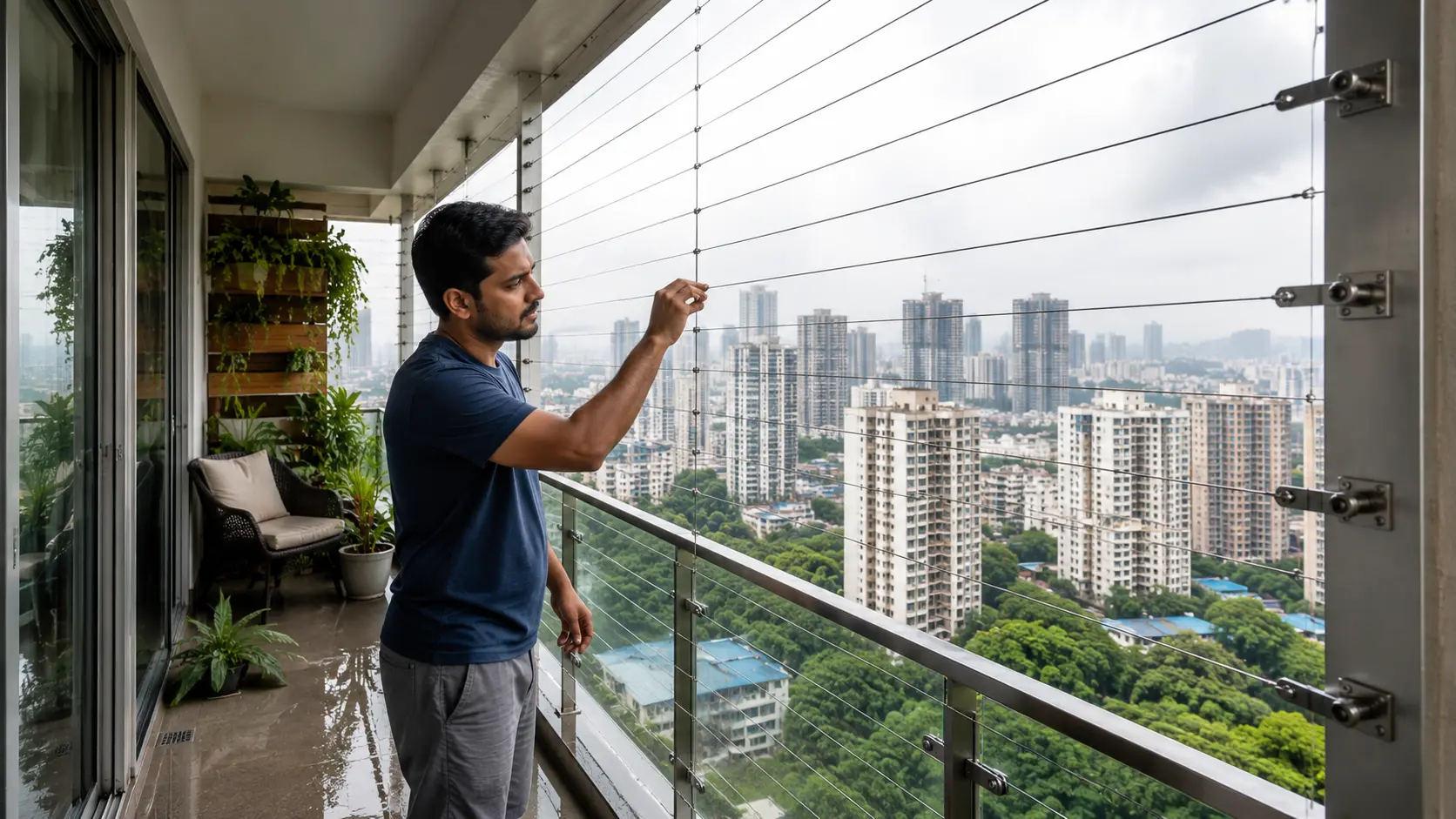
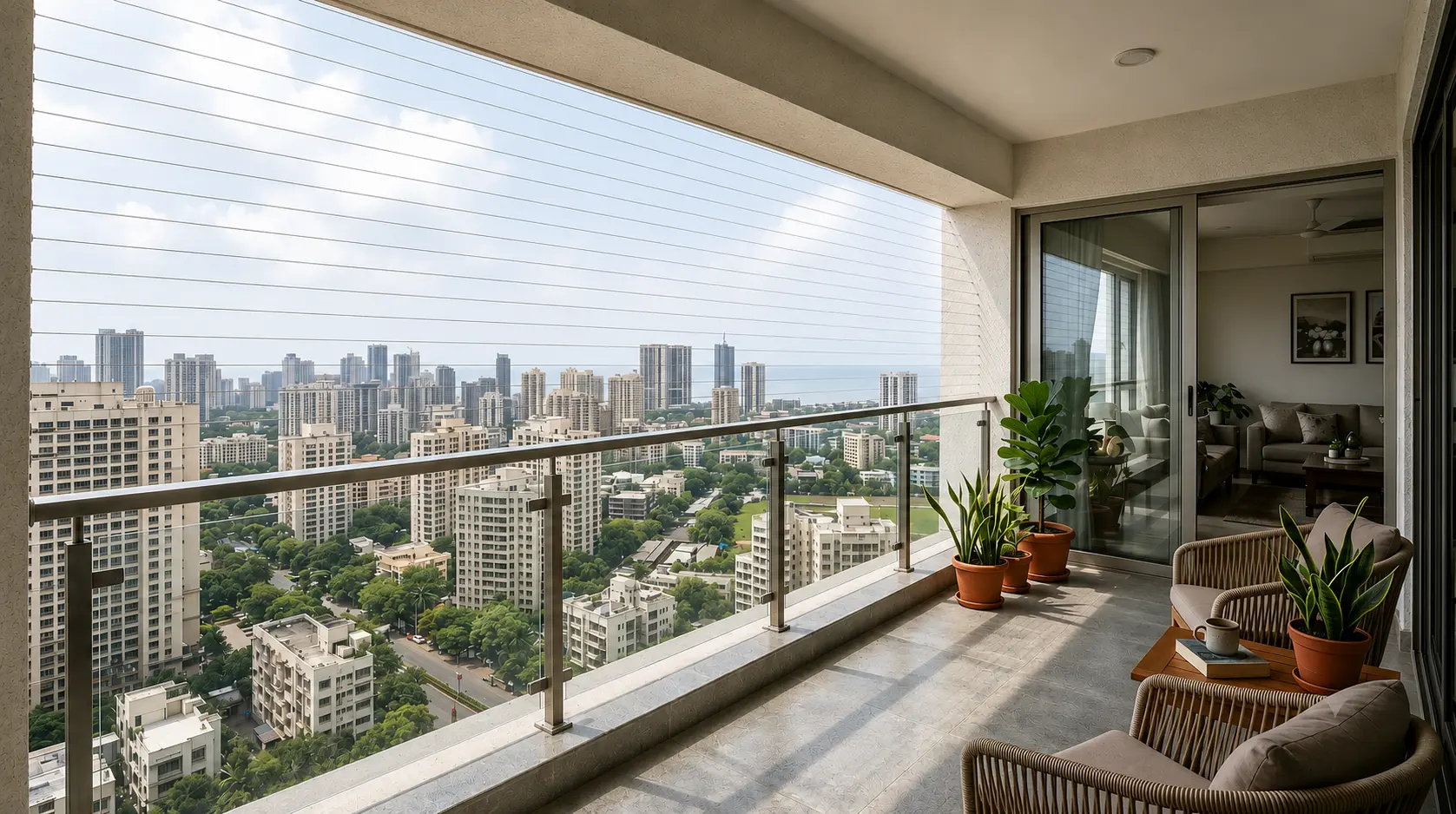
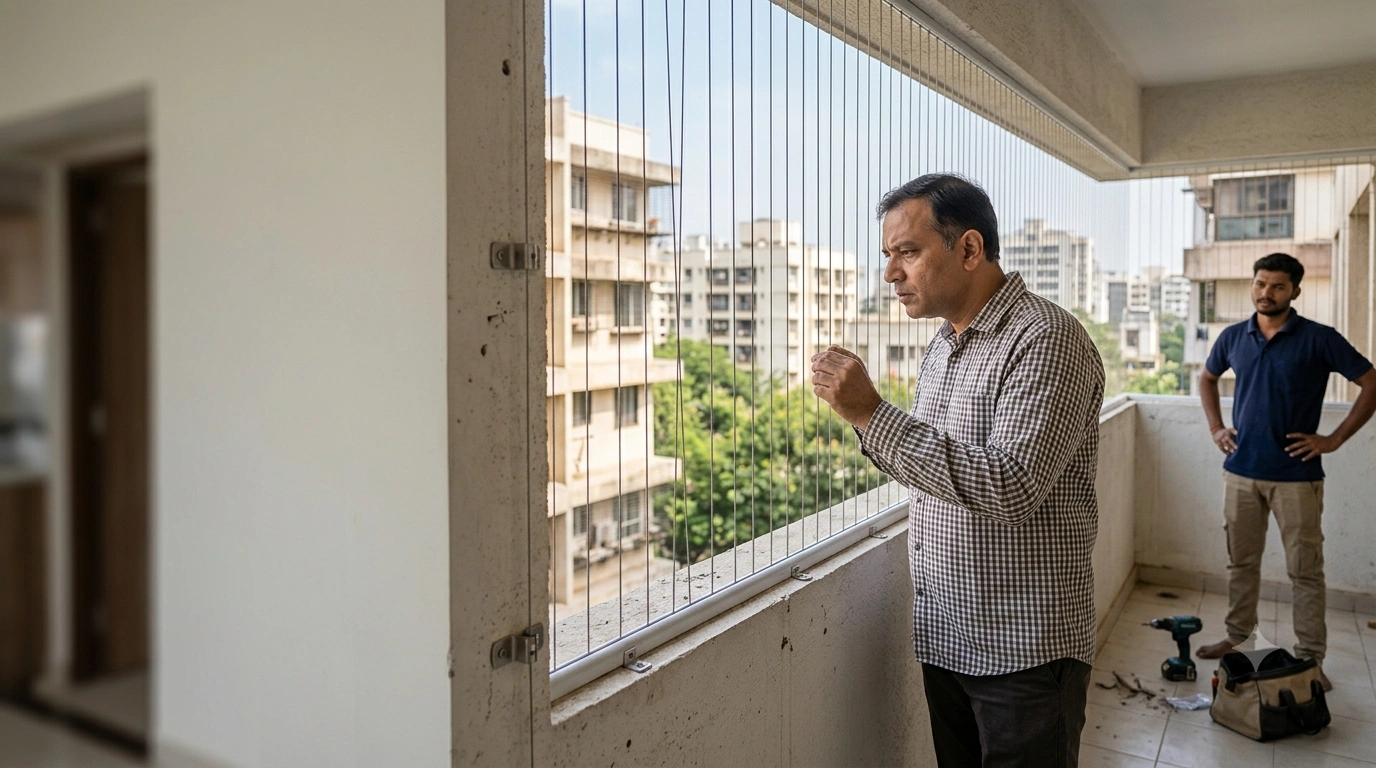
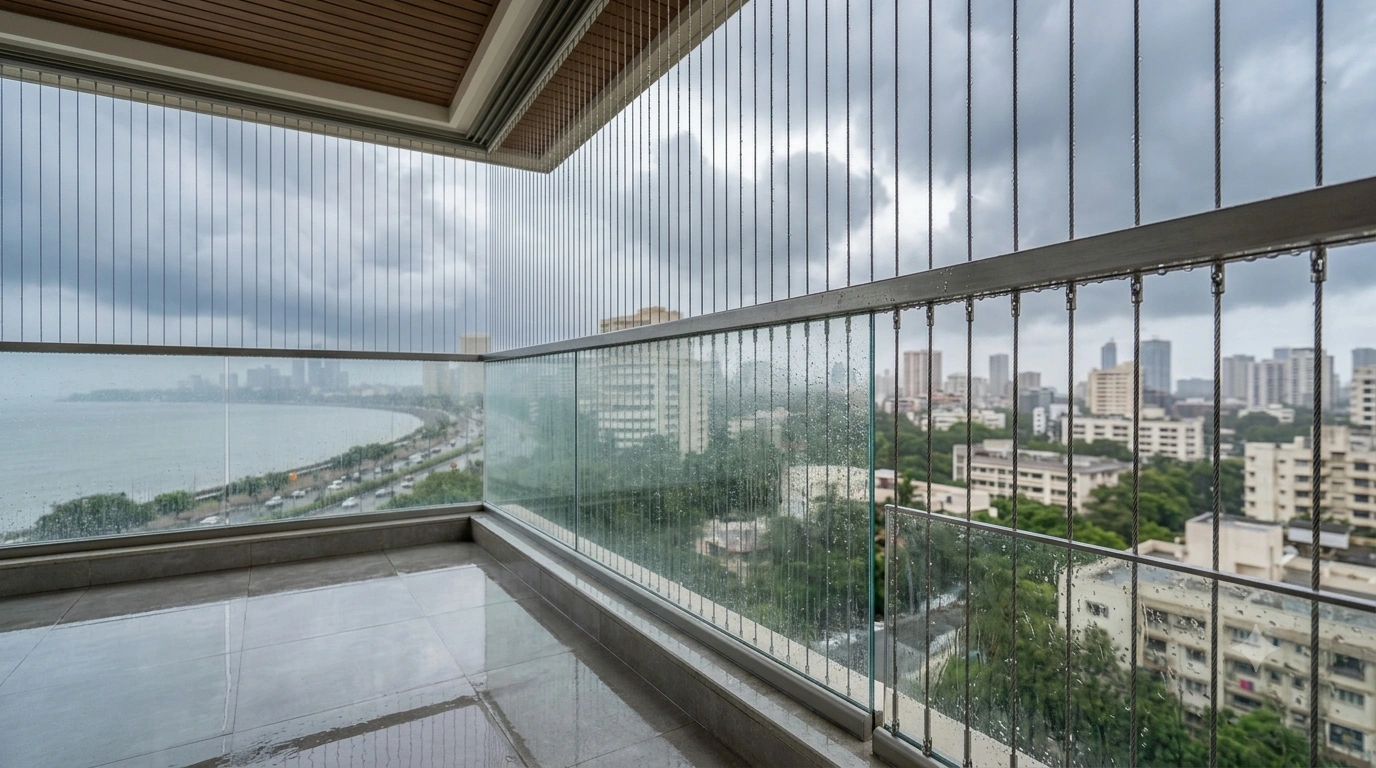
An invisible balcony grill consists of high-tensile stainless-steel cables, fixed vertically or horizontally at controlled spacings. The design focuses on minimal visual obstruction while maintaining safety.
Common characteristics:
- Thin stainless-steel cables
- Corrosion-resistant coating
- Structured anchoring system
- Clean and modern appearance
This system is widely preferred in high-rise apartments where aesthetics and ventilation are important.
Choosing the right invisible grill setup depends on multiple factors like material quality, spacing, installation method, and structural safety requirements. If you’re evaluating options for your home, this guide explains how to choose the right invisible grill for balcony in Mumbai apartments in detail.
Balcony Safety Nets
Balcony safety nets are typically made from durable nylon or polymer materials. They are commonly used for child safety or bird protection.
Common characteristics:
- Flexible net structure
- Lightweight installation
- Quick setup
- Visible mesh pattern
Safety nets are functional but may sag over time and require periodic tightening or replacement.
Glass or Extended Railing Systems
Some residential buildings use extended glass railings or laminated glass panels as protective barriers.
Common characteristics:
- Transparent appearance
- Structural integration with building design
- Minimal obstruction
However, glass systems alone may not provide gap protection for small children unless additional safeguards are installed.
Each balcony safety grill option addresses protection in different ways. The right choice depends on height exposure, building structure, and lifestyle needs.
In the next section, we will compare these options more directly to understand where an invisible system offers advantages over conventional alternatives.
Invisible Balcony Grill vs Safety Nets: What Is the Practical Difference?
When evaluating balcony protection options in Mumbai, two of the most commonly considered systems are invisible grills and safety nets. Both are designed to reduce fall risk, yet they differ significantly in structure, durability, and long-term performance.
Understanding these practical differences helps homeowners make decisions based on usage, exposure to height, and maintenance expectations rather than just cost.
Structural Comparison
| Feature | Invisible Balcony Grill | Balcony Safety Net |
|---|---|---|
| Material | Stainless steel cables | Nylon or polymer mesh |
| Durability | Long-term structural solution | Medium-term flexible solution |
| Visual Impact | Minimal obstruction | Visible mesh pattern |
| Wind Resistance | High when properly tensioned | Can loosen over time |
| Maintenance | Low | Periodic tightening required |
| Suitability for High-Rise | Highly suitable | Suitable but may require frequent checks |
| Aesthetic Appeal | Modern and clean | Functional appearance |
Performance Considerations
An invisible balcony grill is engineered to function as a structured barrier. The cables are fixed under controlled tension and anchored into strong frames. This provides consistent resistance against pressure.
A balcony safety net functions as a flexible catch system. It is effective for basic fall prevention but may stretch or sag over time and with exposure to the environment.
Design Impact
In high-rise apartments where open views and architectural continuity matter, many homeowners prefer the cleaner finish of an invisible system.
A safety net may serve well as a temporary or budget-conscious measure, but it often remains visually noticeable.
Long-Term Value
When evaluating a balcony safety grill, durability and maintenance requirements should be considered carefully. A structured system typically requires less frequent intervention than a flexible mesh solution.
The choice ultimately depends on height exposure, household composition, and long-term expectations.
Over time, the true difference between an invisible balcony grill and a safety net becomes evident in how each responds to environmental stress and daily use. Balcony protection should therefore be assessed as part of the building’s overall structural reliability.
How to Choose the Right Balcony Safety Grill in Mumbai
In Mumbai’s high-rise apartments, balcony protection must be evaluated with both structural and environmental factors in mind. The right system should respond to height exposure, wind pressure, and daily usage patterns.
Before finalising a solution, assess the following:
- Floor Level
Apartments located on higher floors experience stronger wind impact. Structured systems with secure anchoring are better suited for such conditions.
- Balcony Layout
Glass railings, compact balconies, and extended decks require customised alignment rather than standard installations.
- Household Composition
Homes with children, elderly residents, or pets require tighter gap control and stronger barrier reliability.
- Material Quality
In a coastal climate like Mumbai, corrosion resistance is essential. Stainless steel systems typically perform better in humid conditions.
- Maintenance Expectations
Some solutions require periodic tightening or replacement. Others are designed for long-term structural stability.
- Design Preference
If preserving open views is important, the chosen balcony safety grill should align with modern architectural aesthetics.
Many homeowners searching for invisible grill installation in Mumbai for a high-rise apartment balcony often focus only on price. However, installation precision, material strength, and structural understanding matter far more in elevated residential settings.
Careful selection ensures that safety is integrated into the apartment’s structure rather than added as a temporary solution.
Where Safety Becomes Part of the Structure
Mumbai’s high-rise lifestyle has reshaped the way balconies are designed and experienced. They are no longer passive architectural elements. They function as active extensions of living spaces, exposed to height, coastal weather, and daily movement. In such an environment, balcony protection cannot be treated as a secondary installation. It must be evaluated as part of structural planning.
Effective balcony safety in high-rise apartments rests on three core principles:
- Structural reliability
- Climate resistance
- Visual continuity
Structural reliability ensures that the system remains stable under pressure and consistent over time. Climate resistance becomes essential in a coastal city where humidity and wind exposure influence material performance. Visual continuity ensures that safety measures do not compromise the openness that defines modern residential design.
At Chirag Nettings, balcony protection is approached with this balance in mind. We work with durable materials suited to Mumbai’s environmental conditions and focus on precise installation tailored to each apartment layout. Every project is executed with attention to long-term performance and architectural alignment.
In vertical urban living, safety should feel engineered rather than imposed. When the right balcony safety system is selected, it integrates into the structure itself, offering dependable protection while preserving the space’s experience.
FAQs
What is the difference between an invisible grill and a safety grill for balcony use?
A safety grill for balcony installations typically uses fixed metal bars that create a visible barrier. An invisible balcony grill uses tensioned stainless-steel cables designed to minimise visual obstruction while maintaining structural protection.
Is an invisible balcony grill suitable for high-rise apartments?
An invisible balcony grill is commonly preferred in high-rise apartments because it combines safety with open views and airflow. When installed correctly, it provides reliable protection without enclosing the space.
Are balcony safety nets a permanent solution?
Balcony safety nets are generally considered a functional solution for basic fall prevention. However, they may require periodic tightening or replacement depending on weather exposure and long-term usage.
Where can I get invisible grill installation in Mumbai for a high-rise apartment balcony?
You can get invisible grill installation in Mumbai from specialised providers experienced in high-rise residential projects. It is advisable to choose a company that uses corrosion-resistant materials and follows proper anchoring standards suited for coastal conditions.
Does installing a balcony safety grill affect ventilation?
A properly installed balcony safety grill is designed to allow airflow and natural light. The impact on ventilation depends on the material and spacing of the chosen system.
How long does a balcony safety grill typically last?
The lifespan of a balcony safety grill depends on material quality and installation precision. Stainless steel systems generally offer long-term durability when maintained appropriately.