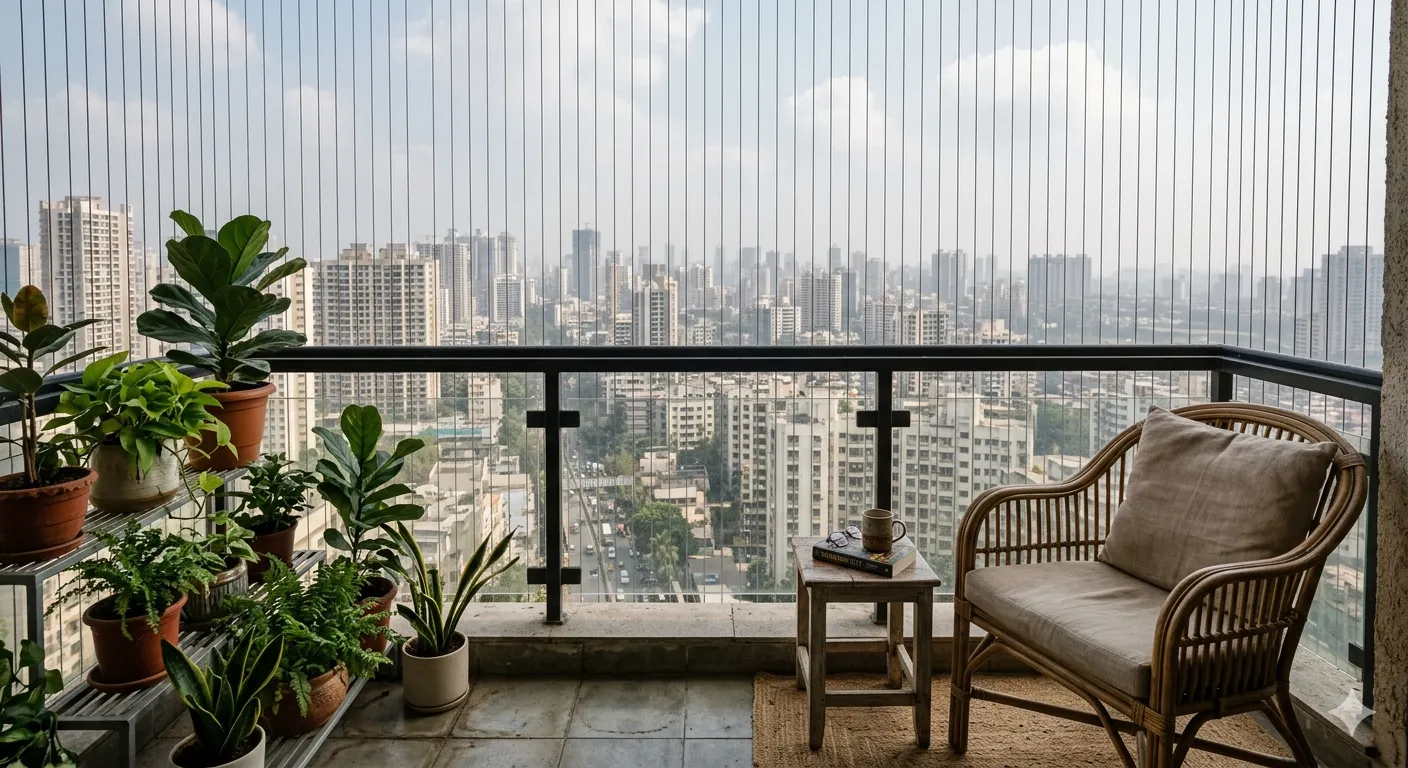
A high-rise balcony should feel safe to use without losing light, airflow, or visual openness. This guide takes you through invisible grill installation, the specifications that matter, and the practical factors that shape a better decision.
A high-rise balcony can add a lot to a home. It brings in light, opens up the view, and gives the apartment a little more breathing space. But the same openness also makes homeowners think more carefully about safety, especially when the balcony is part of everyday family life.
That is where the decision starts to shift.
It is no longer only about adding a barrier. It is about finding something that can protect the space without making it feel shut in. For many apartment owners, that balance matters just as much as the installation itself. The balcony should still feel comfortable to use, easy on the eyes, and suited to the overall look of the home.
This is one reason that invisible grills for balcony spaces are getting more attention today. They are often considered by homeowners who want a cleaner, lighter alternative to bulky protection systems, especially in modern high-rise apartments.
Before moving ahead, a few practical things usually come to mind. Will the installation suit the balcony layout? Will the material hold up well over time? And will the final result feel secure without making the space look heavy?
So before choosing one, it helps to look at the practical side of the decision just as closely as the visual side.
Why High-Rise Apartment Balconies Need a Smarter Safety Solution
A balcony does not feel the same on the 12th floor as it is closer to the ground.
The design may be similar, but the way people experience the space changes.
What changes first?
The sense of exposure. Even a wide and well-planned balcony can feel more open at a greater height. That is often when homeowners become more conscious of movement near the edge, especially in homes with children, pets, or older family members.
What changes next?
The expectation from the safety solution itself. People do not just want something that closes the opening. They want something that protects the space without making it feel visually heavy or less comfortable to use.
And what changes after that?
The decision becomes more thoughtful. Instead of asking only, Do I need balcony protection? Homeowners start asking, what kind of protection will suit the way this home looks and feels?
That shift is understandable. According to the Directorate General of Health Services under the Ministry of Health and Family Welfare, more than 10% of deaths in India can be attributed to injuries, and falls are among the major contributors. That makes safety planning in everyday residential spaces more relevant than it may appear at first.
In high-rise homes, that usually means looking for a solution that supports three things together: safety, openness, and daily comfort. When all three are considered at the same time, the balcony feels better protected without losing the qualities that make the space enjoyable in the first place.
What Are Invisible Grills and How Do They Work?
At first glance, invisible grills may seem like a design-led feature, but their purpose is practical. They are used to make open areas feel safer without giving the space a closed or bulky appearance.
For high-rise homes, that balance matters. The idea is not just to add a barrier, but to do it in a way that still suits the openness of the balcony.
What invisible grills are
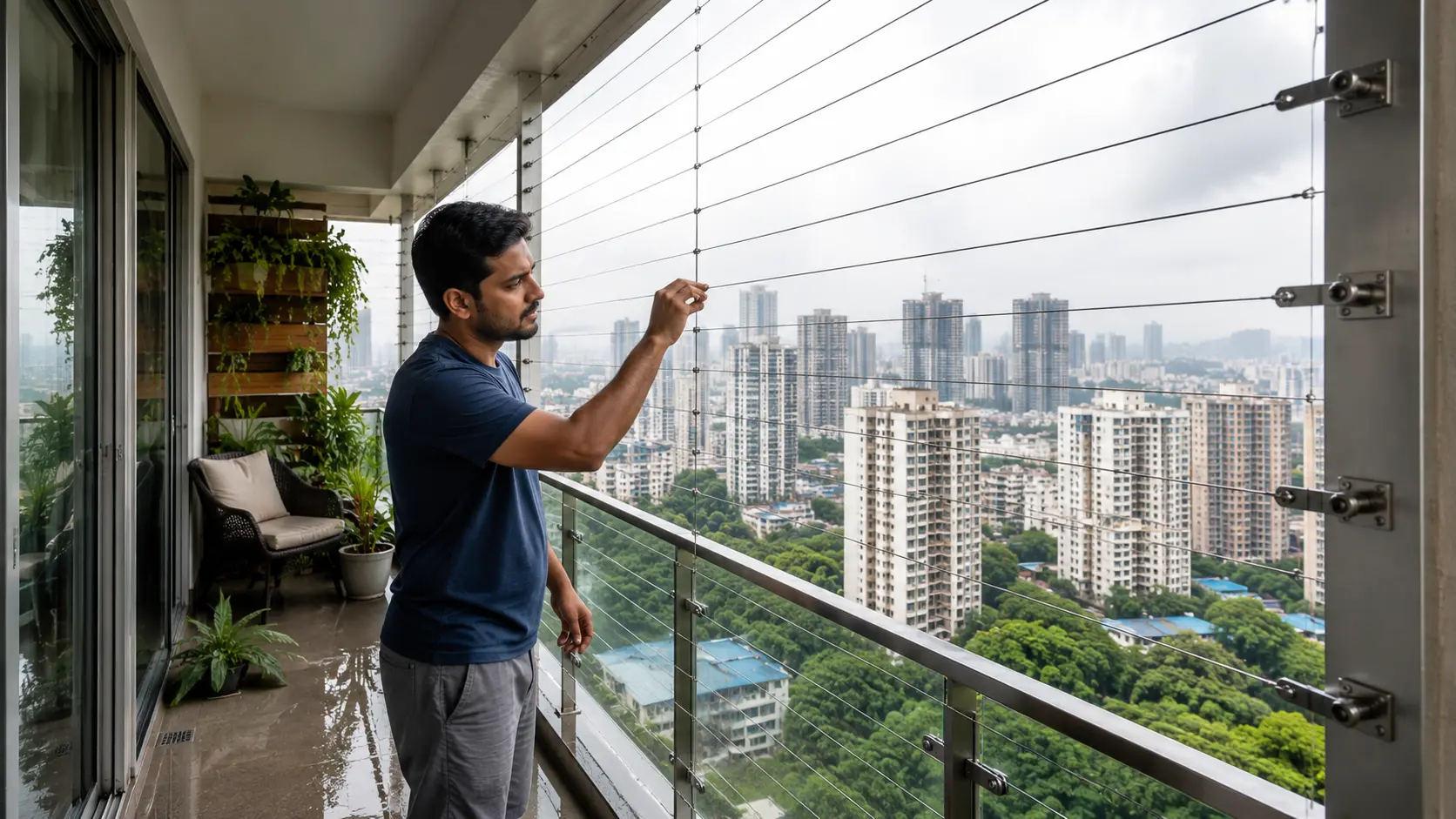
- They are made using slim, tensioned steel wires fixed across an opening.
- The layout is measured according to the size and structure of the space.
- They are commonly used in balconies and, in some cases, for selected window openings as well.
How they work
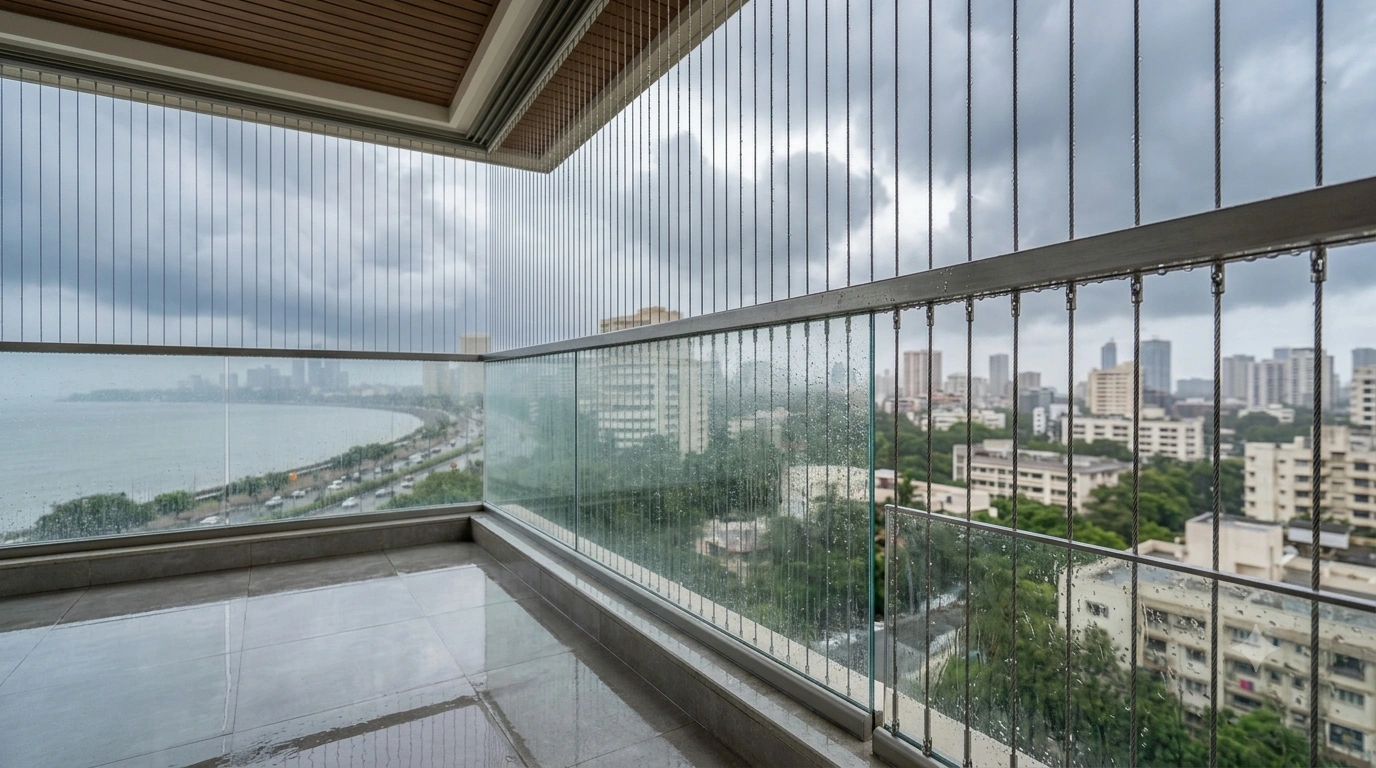
- The wires create a protective layer across the open side of the balcony.
- This helps make the area feel more secure in daily use.
- The system is designed to stay visually lighter than a conventional heavy grill.
Why many homeowners consider them
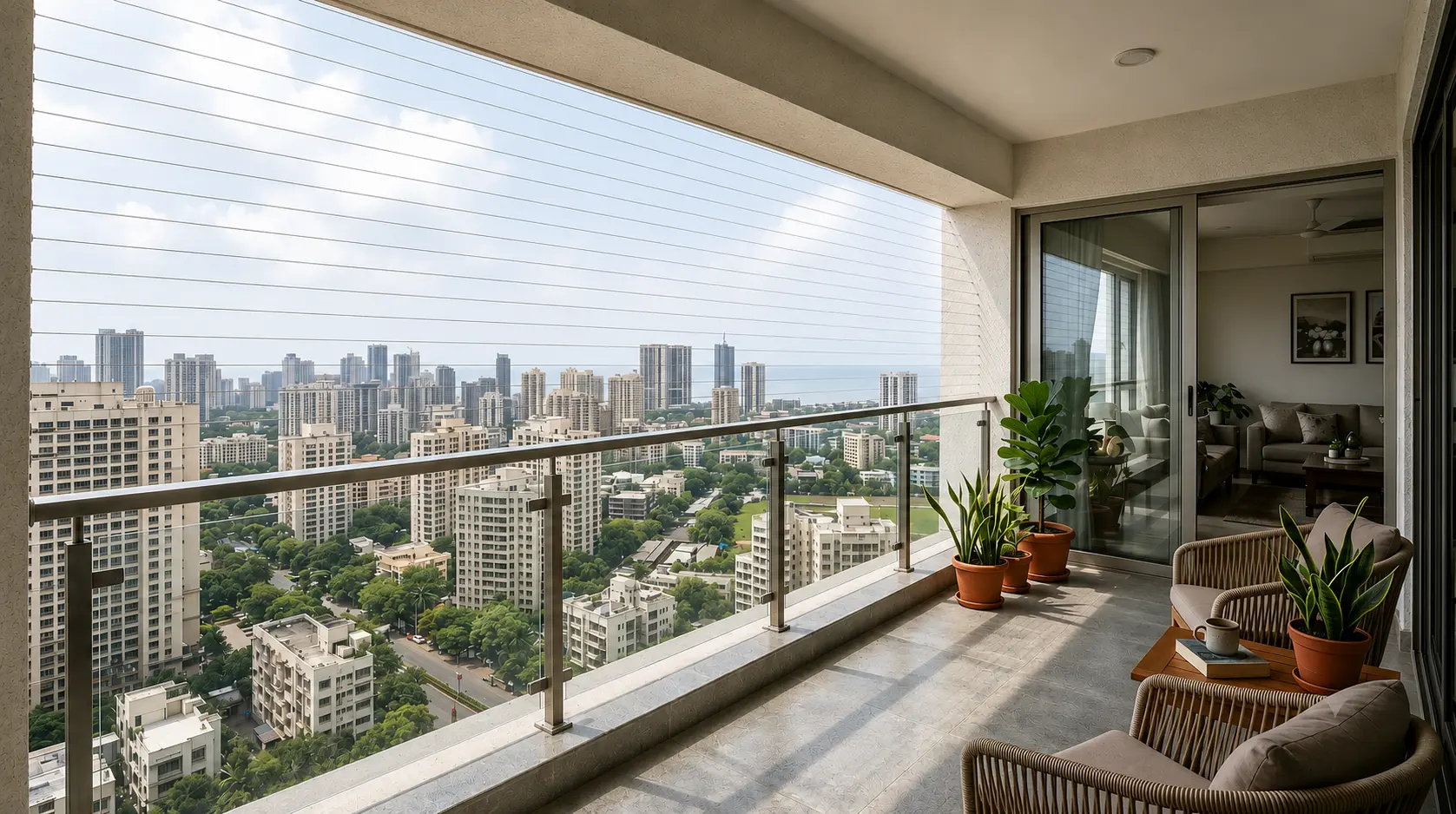
- They allow the balcony to feel more open.
- They do not make the space look heavily covered.
- They are often preferred in modern apartments where both safety and appearance matter.
Invisible grills are chosen because they combine function with a cleaner visual effect. When planned and fitted properly, they help protect the space while allowing the balcony to retain the openness that makes it enjoyable to use.
Are Invisible Grills Suitable for Every High-Rise Balcony?
In many cases, yes. But the answer depends less on the idea of the product and more on the actual balcony it is being planned for. Some spaces allow a cleaner and more direct installation, while others need a little more thought before the fitting feels right.
A balcony is usually easier to work with when:
- The opening is clearly defined
- The fitting line is not broken by too many design elements
- Proper fixing surfaces are available
- The layout does not need too many adjustments
At the same time, some balconies need closer evaluation because of details such as:
- Corner turns or side extensions
- Existing railings or ledges
- Uneven edges or interrupted lines
- Active daily use of the space
That is why the decision should not be treated as identical for every apartment. In some homes, the planning may also extend beyond the balcony, especially when homeowners want a similar safety approach through an invisible grill for windows in other parts of the house.
So, the better way to look at it is simple: invisible grills can suit many high-rise balconies, but the final fit depends on whether the space allows the installation to feel secure, balanced, and practical once it becomes part of everyday living.
What Material and Specifications Matter Most in Mumbai?
When homeowners first look at invisible grills, the finish usually gets noticed before the technical details do. But in coastal apartment conditions, the better decision usually comes from paying attention to what sits behind the appearance.
That matters because a system may look neat on day one, yet the long-term experience depends on whether the material and fitting choices were right from the beginning. On the target service page, key details highlighted for this category include SS 316 stainless steel cable, 2.5 mm or 3 mm wire thickness, and anti-rust, low-maintenance positioning.
Before finalising an invisible grill in Mumbai, these are the details worth checking closely:
- Steel quality
This is one of the first things that should be asked clearly. In humid and coastal conditions, corrosion resistance matters more than surface appearance alone.
- Wire thickness
A slimmer or thicker wire changes both the feel and the finish of the installation. The product page for this category specifically points to 2.5 mm and 3 mm rope wire options, which shows that thickness is not a casual detail.
- Spacing between wires
Spacing should suit the purpose of the opening. It should feel planned for the space, not chosen like a standard template.
- Support components and fittings
The visible wire is only one part of the system. Channels, brackets, and fixing support also influence how stable and neat the final installation feels.
- Maintenance practicality
A system should not only look clean when first installed. It should also be manageable in regular use, which is why anti-rust and low-maintenance value matter in open residential spaces.
The right installation is usually the result of several details working together, not one feature standing on its own. When the material, thickness, spacing, and fittings are all considered properly, the final setup tends to feel more dependable over time.
What an Invisible Grill Installation Usually Happens
Invisible grill installation may look simple once it is completed, but the final result depends on how carefully each stage is handled. In a high-rise apartment, the process usually follows a planned sequence rather than a quick on-site adjustment.
- Step 1: The balcony is assessed
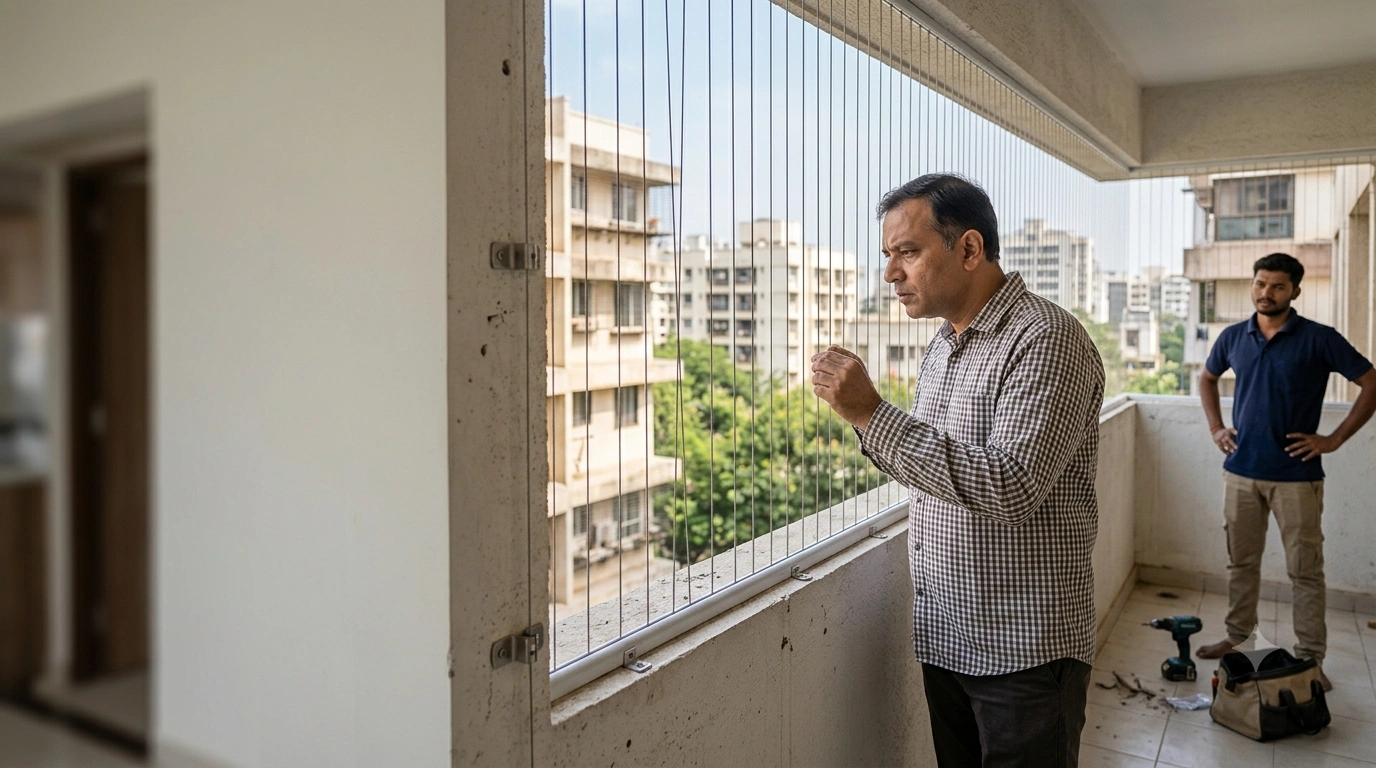
The opening, edges, and available fixing areas are checked first so the installation can be planned according to the actual space.
- Step 2: Measurements are taken
Exact measurements are important because the fitting should match the balcony properly, not be adjusted roughly later.
- Step 3: Specifications are decided
At this stage, details such as wire thickness, spacing, and the fitting approach are finalised based on the layout.
- Step 4: Components are prepared
Once the measurements and specifications are clear, the required parts are arranged according to the size and structure of the opening.
- Step 5: Installation is carried out
The grill is then fitted across the balcony using the planned support points and alignment.
- Step 6: Final adjustment and finishing are done
After installation, the setup is checked and finished so it feels neat, balanced, and properly integrated into the space.
When each step is handled properly, the installation usually feels more secure and more suited to the balcony from the beginning. It also helps the final setup look more balanced, because the fitting follows the space instead of forcing the space to adjust to the fitting. In high-rise apartments, that difference often becomes visible not only in safety, but also in how clean and well-planned the installation feels once it is complete.
What Should You Check Before Booking Invisible Grill Installation?
By the time homeowners reach this stage, the decision usually feels less about appearance and more about whether the installation will actually suit the balcony well. That shift is important, because the details checked before booking often decide how reliable the final setup feels later.
This is also worth taking seriously from a broader safety point of view. The National Health Mission notes that unintentional injury deaths account for nearly 20% of total deaths in the 5–29 age group in India, and that the leading causes include falls. That is one reason safety in everyday residential spaces should be planned carefully rather than treated as a last-minute addition.
Before moving ahead, it helps to pause and check a few basics.
Start with the product details
- Is the material clearly specified?
- Has the wire thickness been explained properly?
- Is the spacing suitable for the opening, or just being offered as a standard option?
Then look at the fitting side
- Has the balcony been measured properly?
- Will the fitting method suit the actual layout of the space?
- Are the support components and fixing points being considered seriously?
And finally, think beyond installation day
- Has the upkeep been explained in practical terms?
- If needed, can the same planning approach work for an invisible grill for windows too?
- Does the provider seem prepared to plan around the actual apartment structure, not just install a product quickly?
For high-rise apartment balconies, it usually makes more sense to choose a service that can assess the space carefully, explain the material and fitting details clearly, and plan the installation around the way the balcony is actually built. That tends to give homeowners more confidence in the decision, because the solution feels thought through from the start rather than adjusted along the way.
A careful check at this stage can save a lot of uncertainty later. When the important details are clear before booking, the final installation usually feels more dependable in both finish and everyday use.
A Thoughtful Approach to High-Rise Balcony Safety
When you stand in a high-rise balcony, the decision becomes quite clear. You do want protection, but you probably do not want the space to start feeling shut in, heavy, or disconnected from the rest of the home. That is why the better choice is usually the one that protects the opening without changing the overall experience of the balcony too much.
So, what really makes the difference in the end? Usually, it comes down to a few practical things: the material used, the way the installation is planned, the suitability of the fitting, and whether the final result feels right for the actual space.
A balcony may look simple, but the details behind the installation often decide whether it feels reassuring every day or just acceptable on the surface.
Chirag Nettings Solutions approaches this as more than a routine fitting job. We look at how the balcony is actually built, how the space is used, and what kind of solution will feel secure without making the home look visually restricted. Our focus is on helping homeowners choose an installation that feels measured, suitable, and easy to live with over time.
A good invisible grill installation should not draw attention for the wrong reasons. It should simply feel like it belongs there, supporting safety, keeping the balcony comfortable to use, and fitting into the home in a way that feels natural from the start.
If you are planning invisible grills for your balcony or windows, connect with us for a solution that is measured carefully and designed to suit your space properly.
FAQs
Are invisible grills for balcony spaces safe for high-rise apartments?
Yes, when the material, spacing, and fitting are planned properly. A well-installed system helps make a high-rise balcony feel safer without making it look closed.
Can I install an invisible grill for windows as well?
Yes. Many homeowners choose an invisible grill for windows along with balcony installation to keep the safety approach consistent across the home.
What is the best material for an invisible grill in Mumbai?
For coastal conditions, corrosion-resistant material matters most. Stainless steel options designed for humidity and outdoor exposure are usually preferred for an invisible grill in Mumbai.
Where can I get invisible grill installation in Mumbai for a high-rise apartment balcony?
Choose a service that offers proper site measurement, clear material guidance, and fitting planned around the actual balcony structure. In high-rise homes, a custom-fit approach usually works better than a standard installation.
Do invisible grills need a lot of maintenance?
Not usually. If the material quality and fitting are right, invisible grills are generally easy to manage with basic cleaning and occasional upkeep.