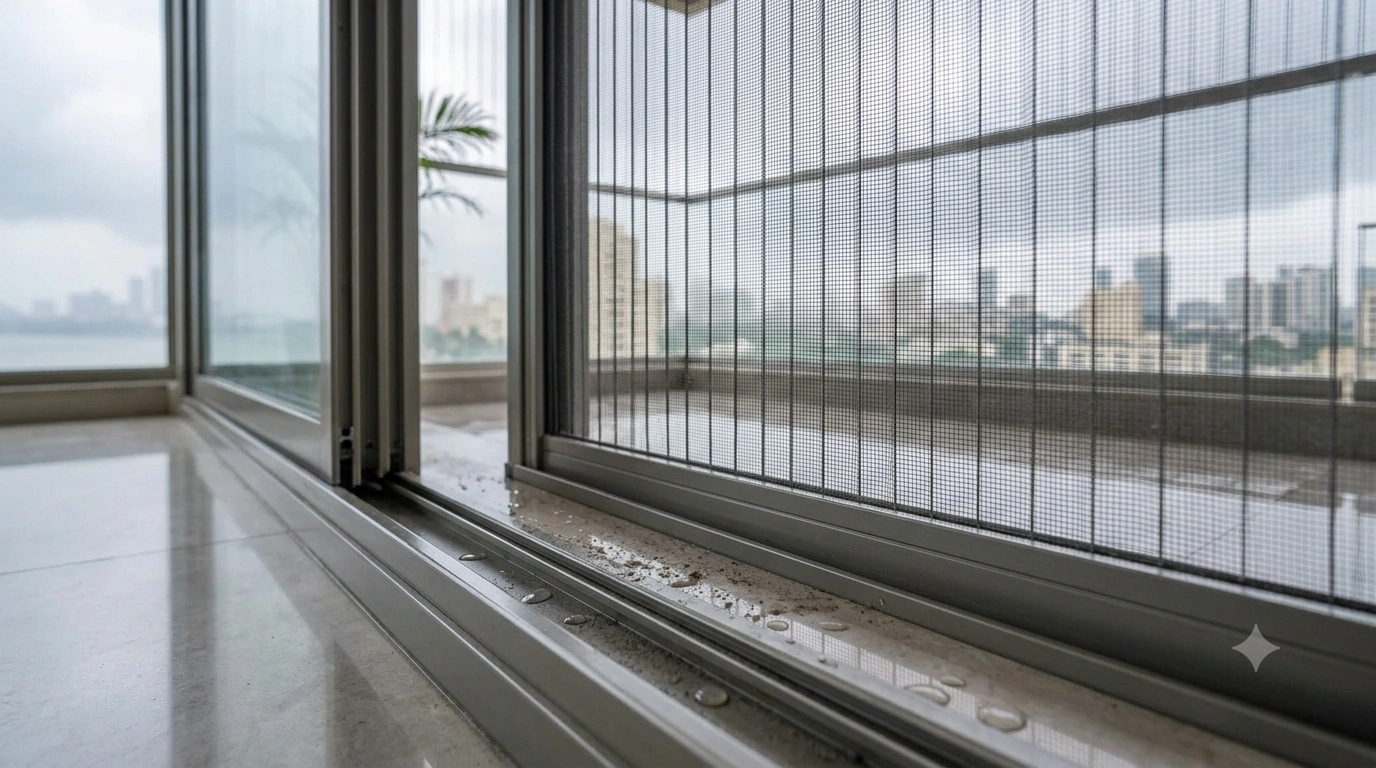
Pleated mosquito nets help keep insects out while allowing fresh air and light into your home. But like any home fitting, they collect dust with regular use. This is more common in cities where windows stay exposed to road dust, humidity and pollution.
Cleaning the net is simple when done the right way. The key is to remove dust without pulling, rubbing, or soaking the mesh. Pleated designs need extra care because the mesh folds into neat sections that can be damaged by rough handling.
A clean net also works better. Dust-free mesh allows better airflow and keeps the net looking neat.
Whether you already have pleated mosquito nets or are planning to install one, regular care can help maintain the system for longer. This guide explains how to clean the mesh, frame and tracks without causing damage.
Why Regular Cleaning Matters for Pleated Mosquito Nets
A mosquito net does more than block insects. It also sits between your indoor space and the outside environment. As a result, the mesh can collect dust, fine dirt and other particles over time.
When dust builds up, you may notice that the net looks dull. Air may also pass through less freely. In some cases, dirt can settle in the folds or tracks and affect smooth movement.
What regular cleaning helps with
| Benefit | What it means for your net |
|---|---|
| Better airflow | Clean mesh allows air to pass through more easily |
| Clearer appearance | The net looks neat and well maintained |
| Smooth movement | Clean folds and tracks can help the system open and close properly |
| Better insect protection | A clean, intact mesh can continue to act as a barrier |
| Longer service life | Gentle maintenance helps reduce avoidable wear |
Regular cleaning is especially useful for homes with windows facing busy roads or open areas. Dust can settle on the mesh faster in such locations.
For a pleated mosquito net in Mumbai, cleaning may need more attention because of the city’s mix of dust, humidity and coastal air. This does not mean the net needs harsh cleaning products. In fact, gentle cleaning is usually the safer approach.
Dust can hide in the folds
The pleated design has many folds. These folds are useful because the net can gather neatly when opened. However, they can also hold small amounts of dust.
If the net is left uncleaned for a long time, the dust may become harder to remove. Rubbing the folds firmly at this stage can put extra pressure on the mesh. A better approach is simple: clean little and often.
Cleaning also protects the frame
The mesh is not the only part that needs care. The frame, guides and tracks can collect dirt too.
If dust gathers in the track, the net may not slide or fold as smoothly as before. Forcing the net can then place stress on the system. A quick wipe of the accessible frame and track during regular cleaning can help prevent this.
A clean net is easier to inspect
Cleaning gives you a chance to check the net closely.
Look for:
- Small tears or holes
- lose sections
- Damaged folds
- Dirt stuck between pleats
- Signs of wear around the edges
- Any change in smooth movement
- Dirt or debris inside the track
Finding a small issue early is better than waiting until the mesh becomes badly damaged.
This is also important if you use other types of insect screens. An automatic mosquito net may have moved or operating parts that need careful handling. The cleaning method should always suit the specific system. The main rule is simple: clean gently, inspect regularly and never force the mesh.
How to Prepare a Pleated Mosquito Net for Cleaning
Before you start cleaning, take a few minutes to prepare the area. This can prevent accidental damage and make the process easier.
You do not need expensive cleaning products. Most routine cleaning can be done with a few basic items found at home.
Keep these items ready
- A soft, clean brush
- A microfiber or soft cotton cloth
- A small bowl of clean water
- Mild soap, if needed
- A dry cloth
- A vacuum cleaner with a soft brush attachment, if available
Avoid preparing strong cleaners just because the net looks dirty. The mesh is designed to be light and flexible. Harsh chemicals or rough tools may affect the material.
Start with the window area
Remove objects that may get in the way while cleaning.
Move curtains, plants or nearby items away from the net. This gives you enough space to open and close the system without catching the mesh on anything.
If the window has a sill, wipe away lose dust first. You do not want that dust to move back onto the clean net.
Close or open the net as needed
Do not pull the net suddenly. Move it slowly and check how the folds gather. This helps you understand the natural movement of the system before you start.
If the net feels stuck, stop. Do not use extra force to move it. There may be dust in the track or another issue that needs attention.
Remove loose dust first
Dry dust should be removed before using water. Use a soft brush and gently move it over the mesh. Follow the direction of the pleats instead of brushing hard across them.
You can also use a vacuum cleaner with a soft brush attachment. Keep the suction low and avoid pressing the nozzle directly against the mesh. The aim is to lift loose dust, not pull at the net.
Check the mesh before using water
Take a closer look at the screen. If you see a small tear, loose edge or damaged fold, do not continue with vigorous cleaning. Water or rubbing may make the problem worse.
It is better to assess the damage first. If the mesh looks sound, you can move on to gentle wiping.
Test your cleaning solution
If you need mild soap, use only a small amount mixed with clean water. Before applying it across the net, test it on a less noticeable section. This can help you check how the mesh reacts.
Never assume that a household cleaner is safe simply because it works on glass, tiles or other surfaces. A product suitable for a window frame may not be suitable for mosquito-net mesh.
Protect the folds
The folds are the most important part to handle carefully. Do not flatten them with your fingers. Do not scrub between the pleats with a hard brush. Avoid pulling one fold away from another.
Let the net keep its natural shape while you clean it.
For homeowners using a mosquito net in Mumbai, this gentle preparation is useful for routine cleaning. It helps remove everyday dust without turning a simple maintenance job into a repair issue.
The same care applies when maintaining an automatic mosquito net. Before cleaning, understand which parts move and avoid getting water into operating components.
Once the area is ready and lose dust has been removed, you can begin the main cleaning process.
Step-by-Step Guide to Cleaning Pleated Mosquito Nets Safely
Once the loose dust is gone, you can move on to a deeper clean. The process should still be gentle. There is no need to scrub the mesh or use a large amount of water.
Follow these steps in order.
Step 1: Remove loose dust
Start with a soft brush or a vacuum cleaner with a soft brush attachment. Gently clean the mesh from top to bottom. Follow the pleat pattern as much as possible. Use light strokes instead of pressing the brush into the folds.
Pay attention to corners and edges. These areas can collect more dust than the centre of the net. If the net is only lightly dusty, this step may be enough for regular maintenance.
Step 2: Prepare mild soapy water
For a deeper clean, mix a small amount of mild soap with clean water. The water should not be very hot. Avoid strong detergents, bleach, solvents and abrasive cleaning products.
You are not trying to strip stains from a hard surface. You are simply lifting dust and light dirt from a delicate mesh.
Step 3: Dampen a soft cloth
Dip a microfiber cloth into the solution and wring it out well. The cloth should be damp, not dripping wet.
Too much water can collect around the folds, frame or track. It can also make the cleaning process harder than it needs to be.
Step 4: Wipe the mesh gently
Start from the top and work your way down. Use light movements along the pleats. Do not scrub back and forth with force.
If you find a stubborn patch of dirt, go over it gently a few times. Do not increase pressure just because the dirt does not disappear immediately. A second gentle pass is safer than one hard scrub.
Step 5: Clean each fold carefully
Pleated designs have several narrow folds. Dirt may settle inside these areas. Open the net as far as it normally goes. Then use the damp cloth to clean the accessible parts of each fold.
Avoid stretching the mesh. Never use your fingers, a pointed object or a stiff brush to dig dirt out from between the pleats. If the dirt cannot be removed without putting pressure on the mesh, it is better to leave it and seek professional cleaning advice.
Step 6: Wipe the frame
The frame can usually be cleaned with a separate soft, damp cloth. Run the cloth along the accessible surfaces to remove dust and marks.
Do not flood the frame with water. Pay particular attention to joints and areas where water may collect. If the frame has a coated finish, avoid abrasive pads that may scratch the surface.
Step 7: Clean the track
The bottom or side track can collect dust, hair and small particles. First remove loose debris with a soft brush or dry cloth. A vacuum with a suitable attachment can also help.
Then wipe the track with a slightly damp cloth. Make sure the track is reasonably dry before operating the net again.
Step 8: Allow the net to dry
Let the mesh air-dry naturally. Keep the net in its normal position and allow air to circulate around it. There is usually no need to use a hair dryer or place the mesh under strong heat. Direct heat can be unnecessary and may affect some materials or finishes.
Step 9: Test the movement
Once the net is dry, open and close it slowly. Check whether the folds move evenly. Listen for unusual sounds and see if the net catches at any point.
If movement feels smooth, your cleaning is complete. If the net feels stiff or gets stuck, do not force it. Check the track for remaining debris. If the problem continues, professional inspection may be a better option.
What to Avoid When Cleaning the Mesh and Frame
Cleaning a mosquito net is not difficult. Most damage happens when too much force or the wrong cleaning product is used. A few simple precautions can make a big difference.
Avoid these common mistakes
- Do not scrub the mesh.
Hard scrubbing can stretch or weaken the material. It can also disturb the pleated shape. - Do not use a hard-bristle brush.
Stiff bristles can catch on the mesh and pull individual sections. - Do not use bleach or strong chemicals.
These products may not be suitable for the mesh or its finish. Use mild soap only when a deeper clean is needed. - Do not pour water directly onto the net.
A damp cloth gives you better control and prevents unnecessary moisture from reaching the frame and tracks. - Do not use high-pressure water.
A hose or pressure washer can place far more force on the mesh than it is designed to handle. - Do not pull stuck sections.
If the net does not move smoothly, find out why before applying more force. - Do not scrape the mesh.
Knives, pins and other sharp objects can create small cuts that may spread with use. - Do not iron the mesh.
Heat and direct contact with a hot surface are not suitable for mosquito-net material. - Do not leave the net wet for long periods.
Once cleaning is finished, allow it to dry naturally.
Be careful around the pleats
The main advantage of a pleated system is its ability to fold neatly. The folds should therefore be treated gently. If you flatten the pleats while cleaning, they may not gather as neatly later.
Use the natural movement of the net as your guide. There is no need to force the folds open to reach every small particle of dust.
Do not ignore the track
Many homeowners focus only on the mesh.
However, dirt in the track can affect how the system moves. If the net starts to feel rough or catches while closing, check the track before assuming that the mesh has a problem.
Regular dry cleaning of the track can help prevent this.
What about an automatic system?
The same basic principle applies to an automatic mosquito net, but extra care is needed around its operating parts.
Do not spray water or cleaning solution near electrical or mechanical components unless the product instructions specifically allow it.
If you are unsure which areas can be cleaned with water, check the manufacturer’s maintenance instructions or ask a professional.
The goal is not to make the net look perfectly new after every cleaning. The goal is to remove everyday dirt while keeping the mesh, folds and operating system in good condition.
How Often Should You Clean a Pleated Mosquito Net in Mumbai?
There is no single cleaning schedule that suits every home. The right frequency depends on where the window is located, how often the net is used and how much dust enters the room.
For homes in busy parts of the city, regular light cleaning can help keep the mesh in good condition.
A practical schedule can look like this:
| Home condition | Suggested cleaning |
|---|---|
| Low dust and occasional use | Light dusting every 2–4 weeks |
| Regular daily use | Light cleaning every 1–2 weeks |
| High dust or traffic-facing windows | Weekly dust removal |
| After heavy rain or dusty weather | Check and clean when needed |
| Visible dirt on mesh | Clean without waiting for the next schedule |
These are general guidelines rather than fixed rules.
Start with light cleaning
You do not need to wash the net every week.
For most homes, removing loose dust with a soft brush or cloth is enough for routine care. A deeper clean can be done when the mesh has visible dirt or has not been cleaned for some time.
This approach also reduces unnecessary handling of the net.
Mumbai homes may need more frequent care
A pleated mosquito net in Mumbai may face different conditions depending on the location of the home.
A window facing a busy road may collect more dust than one facing an internal garden. A lower-floor home may also need more frequent cleaning than a higher-floor apartment.
Humidity is another factor.
Moisture can cause dust to settle on surfaces and may make dirt harder to remove if it is left for too long.
This does not mean you need to use strong cleaning products. It simply means that regular checks can help.
Look at the net, not just the calendar
Your net can tell you when it needs attention.
Clean it if you notice:
- A visible layer of dust
- Dirt inside the pleats
- Reduced airflow
- Marks on the mesh
- Dust building up around the frame
- Debris inside the track
- Rough movement when opening or closing
If the net looks clean and works smoothly, there is no need to clean it more often than necessary.
Seasonal cleaning can help
You may also choose to inspect your mosquito net in Mumbai before and after periods of heavy rain.
Check the mesh, frame and tracks for dirt or debris. Wipe the accessible surfaces and allow them to dry properly. A deeper clean can also be useful before periods when you expect to keep windows open more often.
Small amounts of regular care are easier on the net than leaving heavy dirt to build up and then trying to remove it with aggressive cleaning.
When to Repair or Replace a Damaged Mosquito Net
Cleaning and maintenance can help extend the life of a mosquito net, but they cannot fix every problem.
Over time, the mesh may develop small tears, or the frame may show signs of wear. The net may also stop moving as smoothly as it once did. Knowing when to stop cleaning and seek help is important.
Signs that need attention
Watch for these signs:
- Small holes or tears
Even a small opening can reduce the net’s ability to keep insects outside. Do not make the damaged area worse by rubbing it during cleaning. - Loose mesh
If the mesh no longer sits correctly within the frame, it may need professional attention. - Damaged pleats
If the folds no longer gather or extend properly, avoid forcing them into position. - Sticking or uneven movement
A net that suddenly becomes difficult to operate may have dirt in the track or another mechanical issue. - Damaged frame
A bent or cracked frame can affect how the mesh sits and moves. - Worn edges
The edges receive regular movement and may show wear sooner than other sections.
Repair or replacement?
The answer depends on the type and extent of damage. A small issue may be repairable. However, if the mesh has widespread damage or the system no longer operates properly, replacement may make more sense.
Do not try to repair a pleated system with tape, glue or sharp tools unless the manufacturer specifically recommends it.
Such quick fixes may affect the way the folds move. They can also create additional pressure on nearby sections.
When professional help makes sense
Professional assistance is useful when the problem is not limited to surface dirt.
Consider getting the system checked if:
- The net gets stuck repeatedly.
- The pleats do not fold evenly.
- The mesh has a large tear.
- The frame appears bent.
- The track remains difficult to operate after cleaning.
- A moving or automatic mechanism is not working correctly.
This is especially important for an automatic mosquito net, where the operating mechanism may require a different type of inspection.
Trying to dismantle the system without knowing how it works can lead to further damage.
Cleaning is not a substitute for inspection
A clean net can still have a damaged mesh. After every deeper clean, take a few seconds to inspect the surface. Hold the net in good light and look along the folds. Check the edges as well. Damage can sometimes be easier to notice around the frame than in the centre.
For homeowners comparing options for a mosquito net in Mumbai, it is also worth considering the window size, usage and type of opening before choosing a replacement. A suitable system should fit the window and work comfortably with everyday use.
How to Keep Your Pleated Mosquito Net Clean for Longer
Good cleaning is only one part of net maintenance. Your daily habits can also affect how quickly dust builds up. The good news is that most of these habits are simple.
Keep the surrounding area clean
- Dust from the windowsill can easily move onto the net.
- Wipe the sill, frame and nearby surfaces regularly. This reduces the amount of loose dust that can settle on the mesh.
- If there is construction work nearby, expect more dust and check the net more often.
Handle the net gently
- Use the handle or designated operating point when opening and closing the system.
- Avoid pushing the mesh itself.
- Do not pull from the folds. Do not let children hang on the net or use it as support.
- Gentle operation helps protect both the mesh and its folds.
Keep the track free from debris
- A clean track helps the system move smoothly.
- Remove dust, hair and small particles before they build up. A soft brush or vacuum attachment can be useful for this.
- Avoid using sharp objects to clean narrow sections of the track.
Do not leave dirt sitting on the mesh
- If you notice a layer of dust, clean it when convenient.
- You do not need to wait for a full monthly cleaning routine.
- A quick dusting takes less time than removing a thick layer of settled dirt later.
Keep cleaning materials simple
- A soft cloth, soft brush and mild soap are usually enough for routine maintenance.
- Avoid collecting multiple chemical cleaners for the job. More cleaning products do not mean better cleaning.
- In fact, the wrong product can create a bigger problem.
Follow the product’s care instructions
- Different net systems can have different materials, finishes and operating mechanisms.
- If your pleated mosquito nets came with specific cleaning instructions, follow them first.
- The same applies to an automatic mosquito net. Its moving or powered components may require specific care.
- When in doubt, ask the installer or manufacturer before using water, chemicals or tools on the system.
A simple maintenance checklist
You can use this quick check once every few weeks:
- Is the mesh free from heavy dust?
- Are the pleats still folding neatly?
- Does the net open and close smoothly?
- Is the frame clean?
- Is the track free from debris?
- Are there any holes or loose edges?
- Does anything feel different from normal?
If everything looks and feels right, continue with your normal cleaning routine.
Choose the right system from the start
Long-term maintenance also depends on choosing a net that suits your window.
Large openings frequently used windows and different styles of frames may need different solutions.
If you are looking for a pleated mosquito net in Mumbai, consider the size and design of the window, how often you will use the net and how much maintenance you are comfortable doing. The right fit can make daily use easier.
At Chirag Nettings, we believe a mosquito net should be easy to use and simple to maintain. We provide netting solutions designed for everyday homes and different window requirements.
We help customers understand their options instead of choosing a system based only on appearance. Our team can guide you on suitable net types, installation and care based on your window.
If you are planning to install or replace pleated mosquito nets, speak to us about your requirements. We can help you find a practical solution that offers insect protection while keeping ventilation and everyday window use in mind.
A little care goes a long way. Clean the mesh gently, keep the tracks free from dust and never force a stuck system. With these simple habits, your mosquito net can remain neat, functional and comfortable to use for longer.